

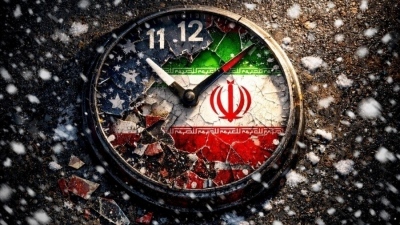
British intelligence estimates that despite the intensity of American and Israeli strikes, Iran has managed to maintain strategic cohesion and effectively exploit its geopolitical advantages
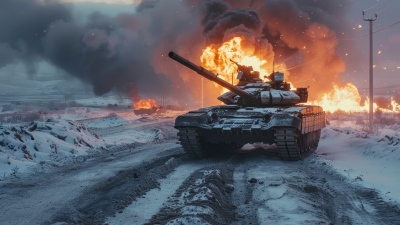
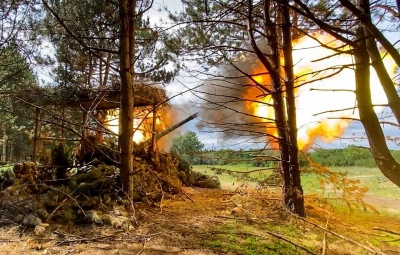
In a period of intense geopolitical turbulence in the Middle East, a remarkable assessment from a former top British intelligence official is sparking significant debate within international strategic circles. Former head of MI6, Alex Younger, estimates that despite massive air strikes by the United States and Israel, Iran is managing to maintain a strategic advantage in the conflict.
This evaluation carries weight as it comes from a man who for years sat at the apex of the British intelligence apparatus and possessed direct knowledge of international security balances. According to Younger, the evolution of the war shows that the strategic picture is not determined solely by the number of air raids or military superiority in technology, but by a state's capacity to endure long-term pressure and influence critical global infrastructure.
Iran has won, according to the British official, by utilizing seven "secret weapons": strategic resilience, the Straits of Hormuz, innovative drones, powerful missiles, defensive warfare, war diffusion, and the economic dimension of the conflict.
The strategic resilience of Iran
Younger argued that, despite the intensity of American and Israeli attacks, Iran has managed to maintain its strategic cohesion and effectively exploit its geopolitical advantages. According to his analysis, Iran has not engaged in a war of choice but in a war of defense.
This distinction is critical. When a country fights for its survival and sovereignty, it possesses greater endurance, political cohesion, and social mobilization than a power engaged in operations abroad. The history of conflict shows that wars are often decided not by initial strength but by duration. In this logic, Iran's strategic stamina, combined with internal mobilization, allows it to absorb blows and continue the conflict with stability.
Alex Younger
The Straits of Hormuz as a geopolitical weapon
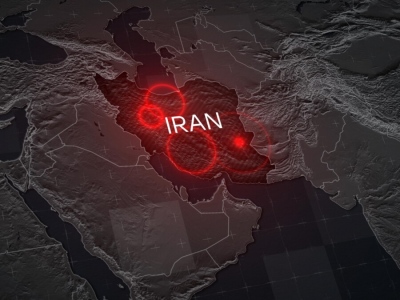
One of the most important points of the analysis concerns the critical passage of the Straits of Hormuz. Younger argued that Iran has successfully leveraged its geographical position to exert pressure on the global economy.
The Straits of Hormuz constitute one of the most important maritime passages in the world, as approximately one-third of the global oil trade passes through them. Iran's ability to threaten or restrict navigation in this passage creates enormous economic pressure on a global level. Energy markets, shipping, and the international supply chain are directly affected by any instability in the region. In this way, Iran does not need to confront military superpowers conventionally; instead, it can use geography and its strategic position as a leverage tool affecting the entire global economic system.
The importance of drones in modern warfare
Another element highlighted by Younger is the role of unmanned aerial vehicles. Iran has invested for years in the development of drones, which now serve as a primary tool of military power. Drones offer several advantages:
-
Low production costs
-
Ease of mass deployment
-
Ability to strike targets at long distances
-
Difficulty of interception in certain cases
With these means, Iran has the capability to strike critical infrastructure, exert pressure on military bases, and create strategic uncertainty for its opponents. This technology has changed the character of conflict. Traditional military superiority in aviation and missile systems no longer guarantees absolute control, as smaller forces can create asymmetric threats.
The war of choice versus the war of defense
Younger points out a crucial dimension of the conflict: the difference between a war of choice and a war of defense. The United States and Israel are participating in operations based on strategic choices and geopolitical goals.
Conversely, Iran presents the conflict as a struggle for survival and the defense of national sovereignty. This difference has significant consequences: it increases internal support for the Iranian government, strengthens societal resilience against hardships, and allows the state to mobilize greater resources. In many historical instances, countries fighting for defense have proven more resilient than stronger adversaries.
The economic dimension of the war
The disruption of the global economy constitutes one of the most significant factors of the conflict. Energy markets react strongly to any tension in the Persian Gulf.
The increase in oil prices and uncertainty in maritime transport affect global economic growth, energy markets, and the political stability of many countries. In this context, Iran has the ability to influence international balances without needing to prevail militarily on the battlefield.
The changing nature of modern wars
This conflict highlights a deeper change in the character of 21st-century warfare. Military power is no longer determined solely by technology or the number of weapons.
Factors such as societal resilience, geopolitical positioning, asymmetric strategies, and economic influence can determine the outcome of a conflict. Iran appears to be exploiting precisely these elements, creating a strategic balance against stronger opponents. Furthermore, the strategy regarding the diffusion of war through strikes on neighboring kingdoms proved correct and bore fruit.
Power is not measured only in bombs
The analysis by the former head of MI6 offers a different perspective on the conflict in the Middle East. Despite the intensity of American and Israeli attacks, Iran retains its key strategic advantages intact.
Its geographical position, the development of technologies like drones, the ability to influence energy markets, and the political cohesion of its society create a framework in which endurance and strategic patience can prove more important than raw military power. In a world where conflicts are becoming increasingly complex, this example shows that power is not measured only in bombs and missiles, but also in the ability of a state to convert its geopolitical advantages into strategic influence.
www.bankingnews.gr






Σχόλια αναγνωστών